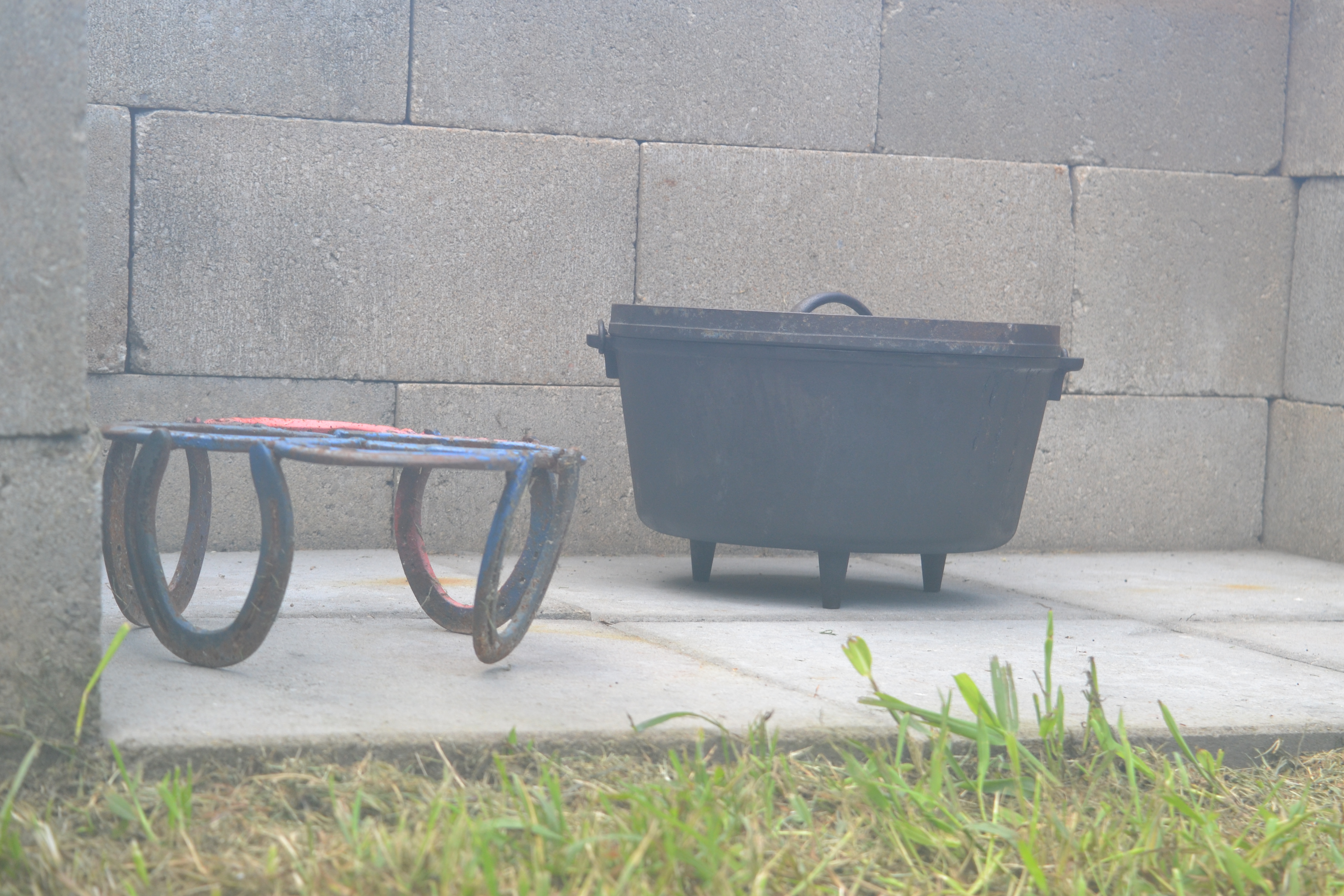
The origins of the Dutch oven come from the Netherlands. During this time the Dutch, using copper and brass, were supplying the world with the world’s best cookware.
Abraham Darby, an English craftsman, believed that there was a market for less expensive cookware by using cast iron. The Dutch, using sand molds, were producing cookware that possessed a fine sheen on the finished product. It would be quite the challenge for Darby to do this. So, Darby and James Thomas, a Welshman and worker of Darby’s began the task of producing cast iron cookware by using sand molds.
Using brass was so much different than using iron, the first attempts did not succeed. They didn’t give up and worked diligently to produce a cast iron cookware from sand molds and finally found success with their method. They were able to produce a cheaper, more durable cookware.

In the beginning they were used directly in open flames. Later on, embers from a fire were used on the lid and underneath the Dutch oven to cook. A well-fitted lid was a must to keep ashes that the embers produced, from finding their way into the food. Because of this the Dutch oven had to be rugged to withstand these harsh conditions.
The Dutch oven evolved, and changes were made. The American style of ovens added small legs to the pot, so the Dutch oven would be elevated over the coals instead of sitting directly on the coals. To keep ashes and embers out of the food a, hinged lid was attached to the pot. The legs made it possible to stack ovens on top of each other, sometimes as much as 5 high.
The DO can be used to cook, fry, braise and bake food. It can be used to cook food the same way that one can cook in a conventional oven. I have one large enough to cook a 13-pound turkey. The bad thing though is it comes in at a weight of 45 pounds.

Because of its durability and versatility, the settlers and colonists valued cast-iron cookware. The ovens were considered so valuable in the 18th and 19th centuries that they were included in wills. Mary Ball Washington’s (George Washington’s mother) will specified that half of her “iron kitchen furniture” should go to her grandson and the other half to her granddaughter.
Dutch ovens were found among the gear of Lewis and Clark. Pioneers took along Dutch ovens and they were used by “camp cookies” on wagon trains and cattle drives. Something I found interesting is that the Dutch oven is the state cooking pot of Texas, Utah and Arkansas. Mountain men were also fond of Dutch ovens. Today there are many Dutch oven organizations that organize contests where Dutch oven cooks compete for prizes. The Boy Scouts of America even teach their scouts Dutch oven skills.

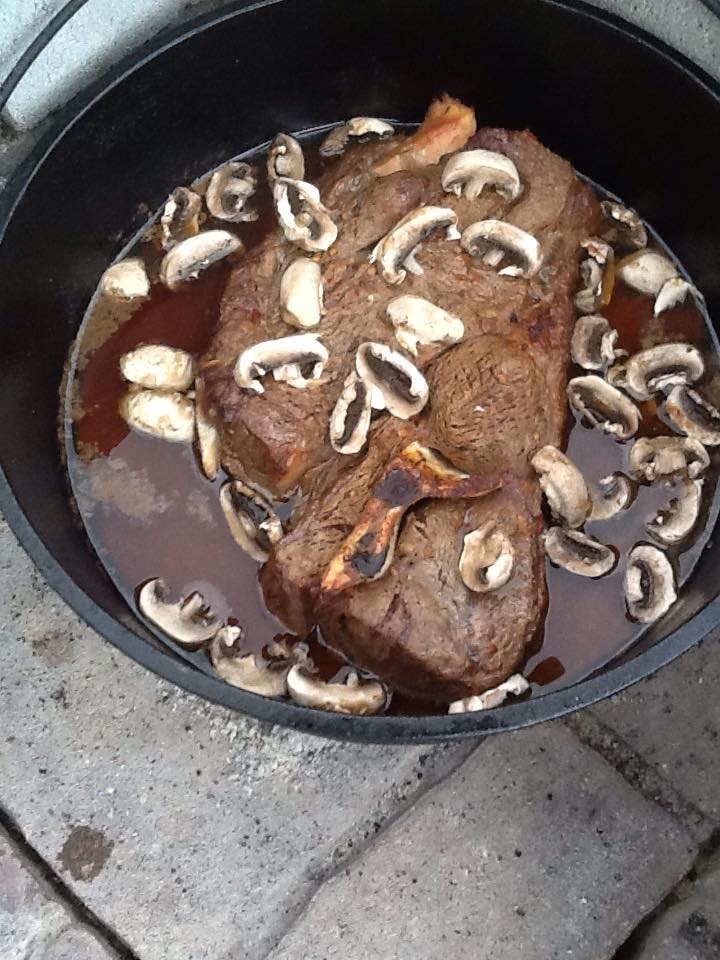


Today Dutch ovens are quite popular with campers. I have had as many as 25 people attend one of my clinics, The Basics of Dutch Oven Cooking. Everything cooked in a Dutch Oven tastes better.
I hope you enjoyed my blog. Be kind to one another and spread the love. Happy cooking!


 doubledacres