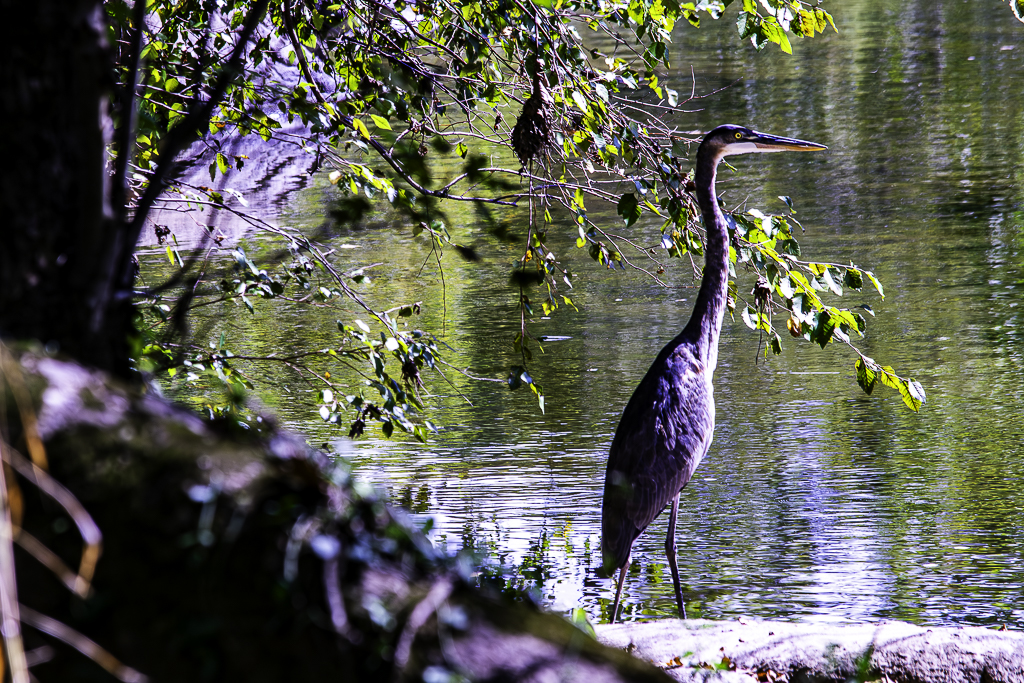
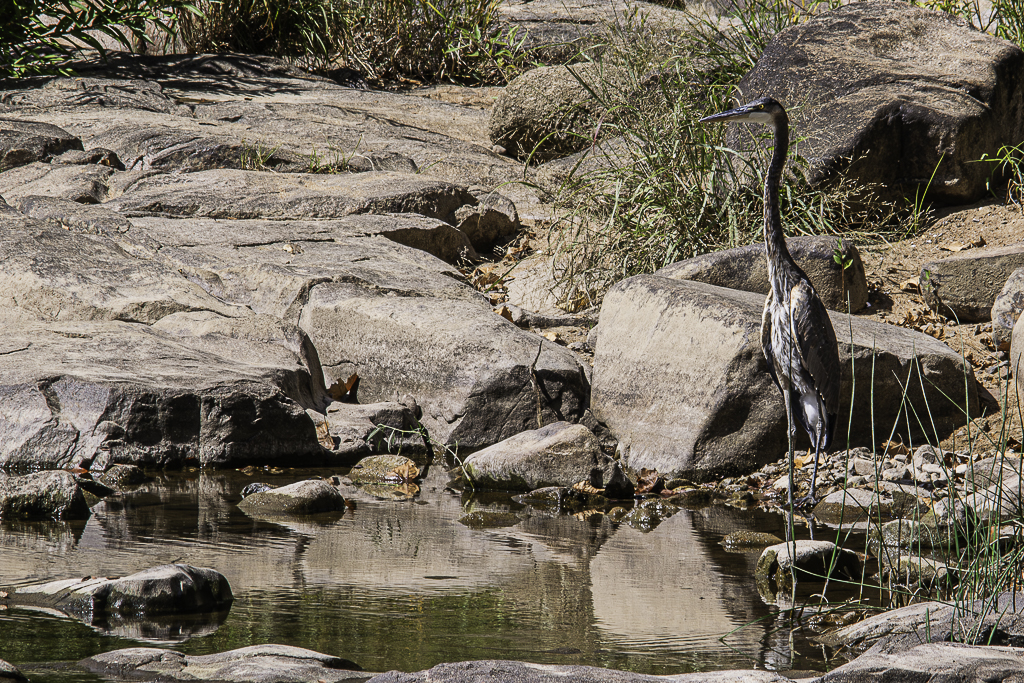
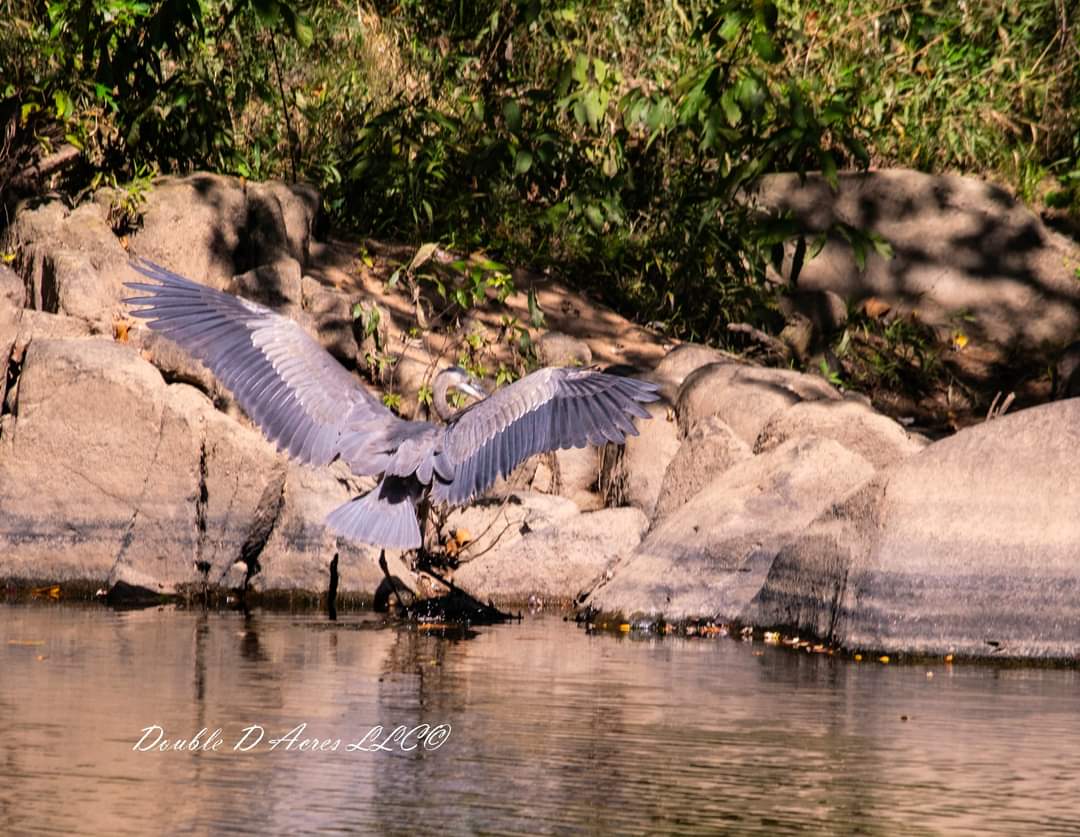
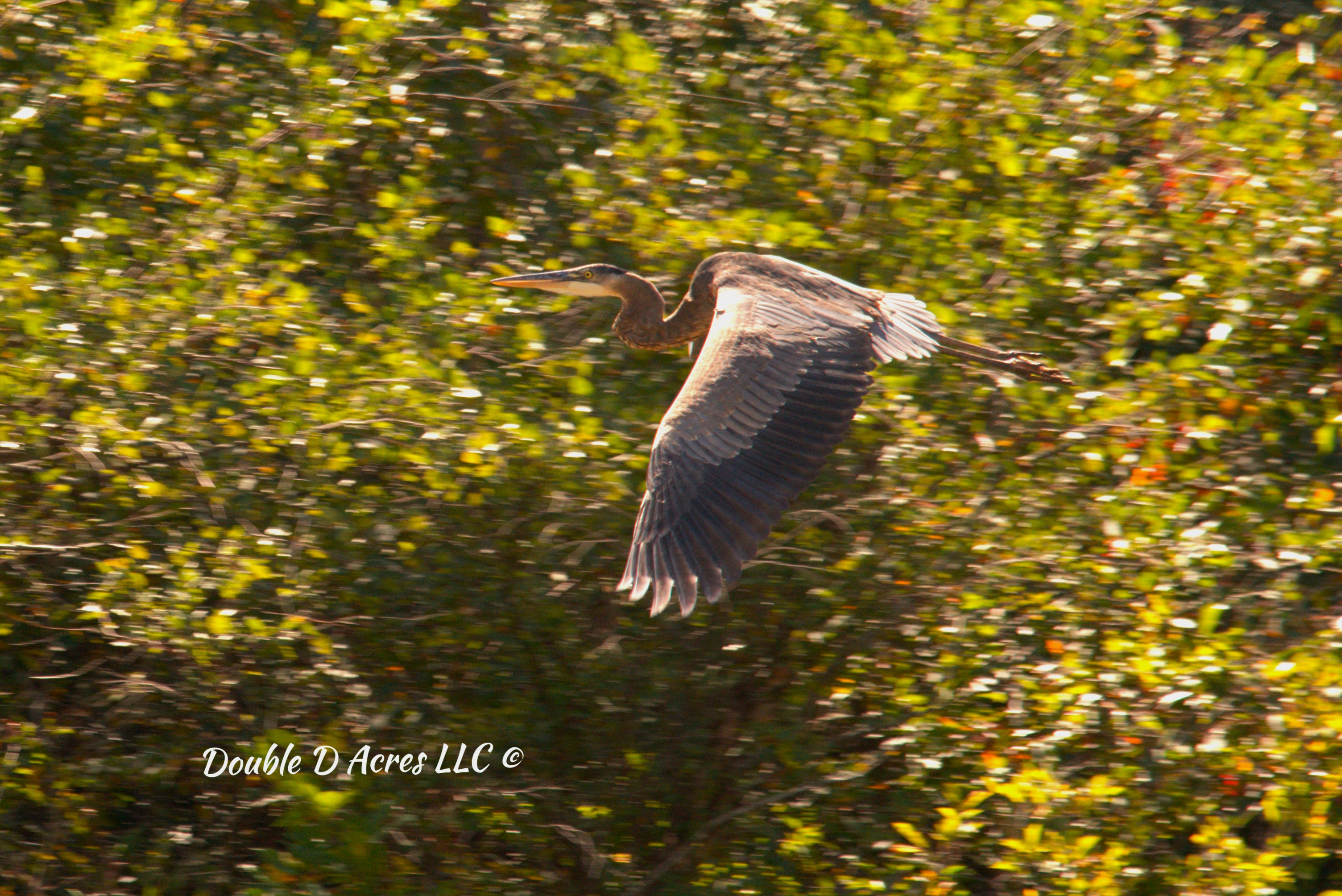
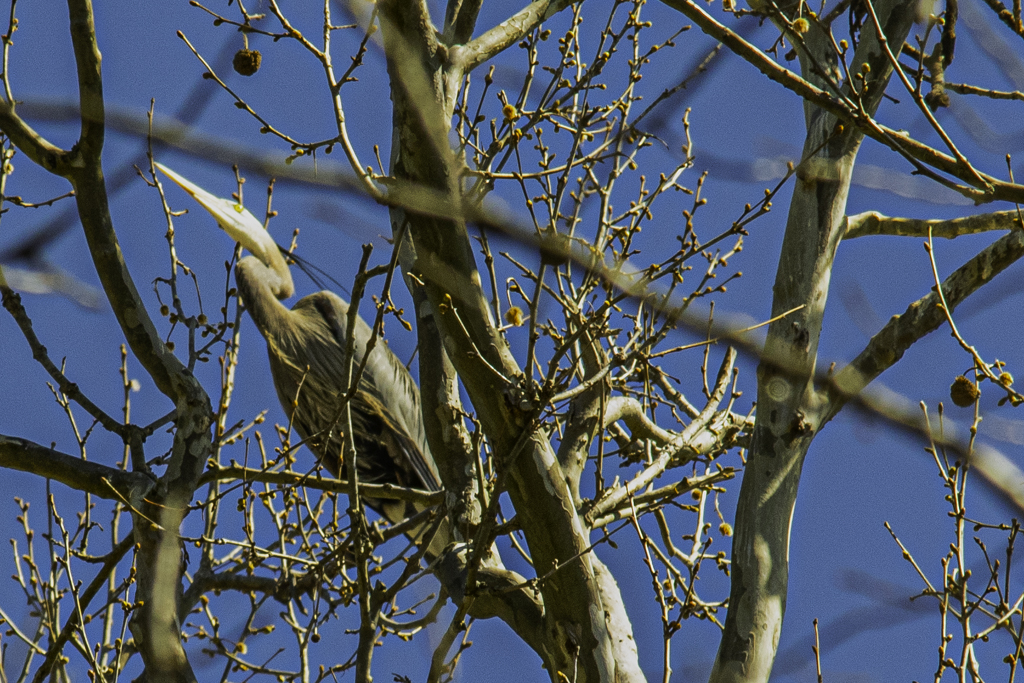
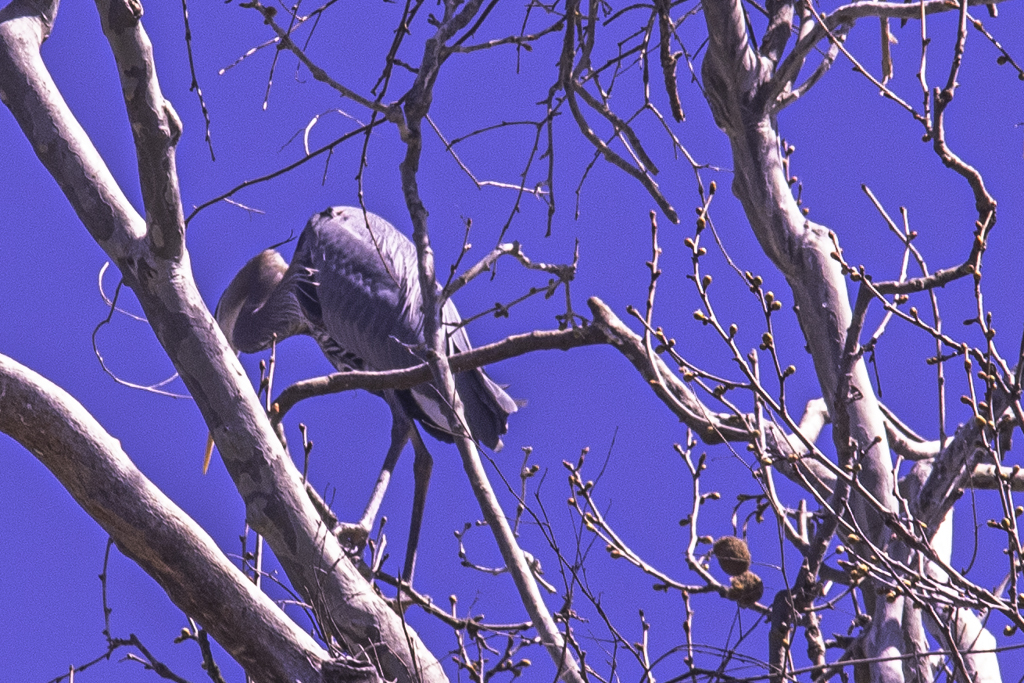
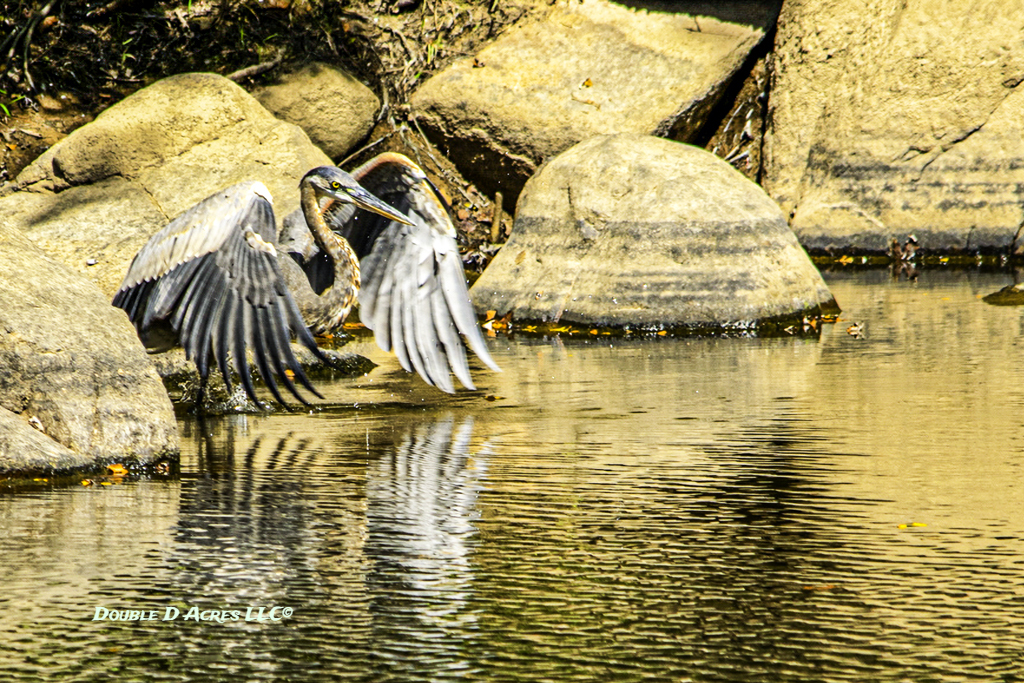
I have heard people call these magnificent birds egrets and herons so I decided to see what I could find. What I found is that an egret is a type of heron. Egrets are usually white with a black bill and legs. Herons are usually blue-gray and have pale legs and thick yellow bills but can also be white.
What to look for. Egrets are usually white, and herons are usually colored i.e. blue, gray, brown. Black legs and dark bills are characteristic of egrets and herons have duller legs and heavier bills. Egrets grow beautiful, lacy “aigrette” feathers during breeding season as herons retain plumes year-round on their heads and chests.
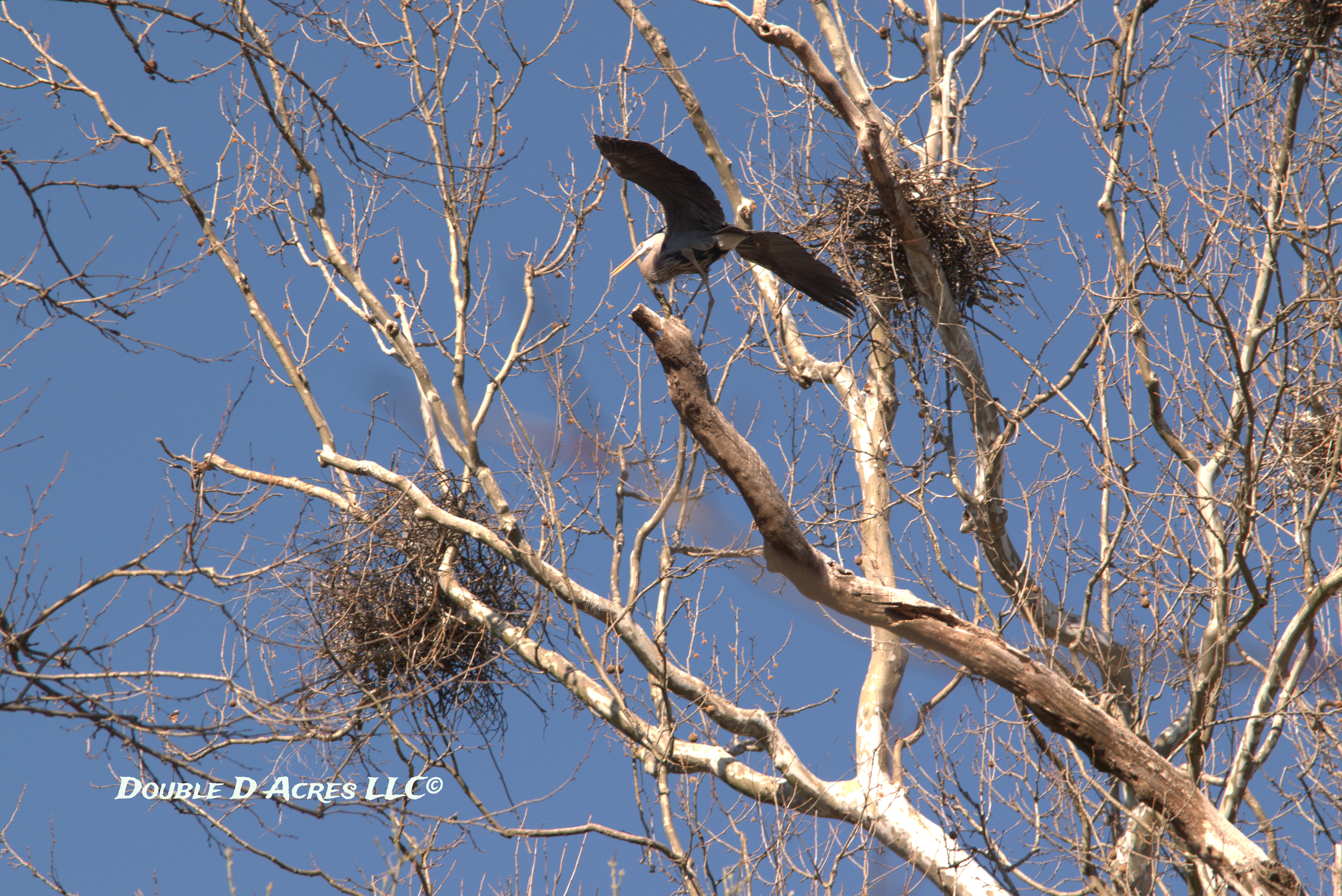
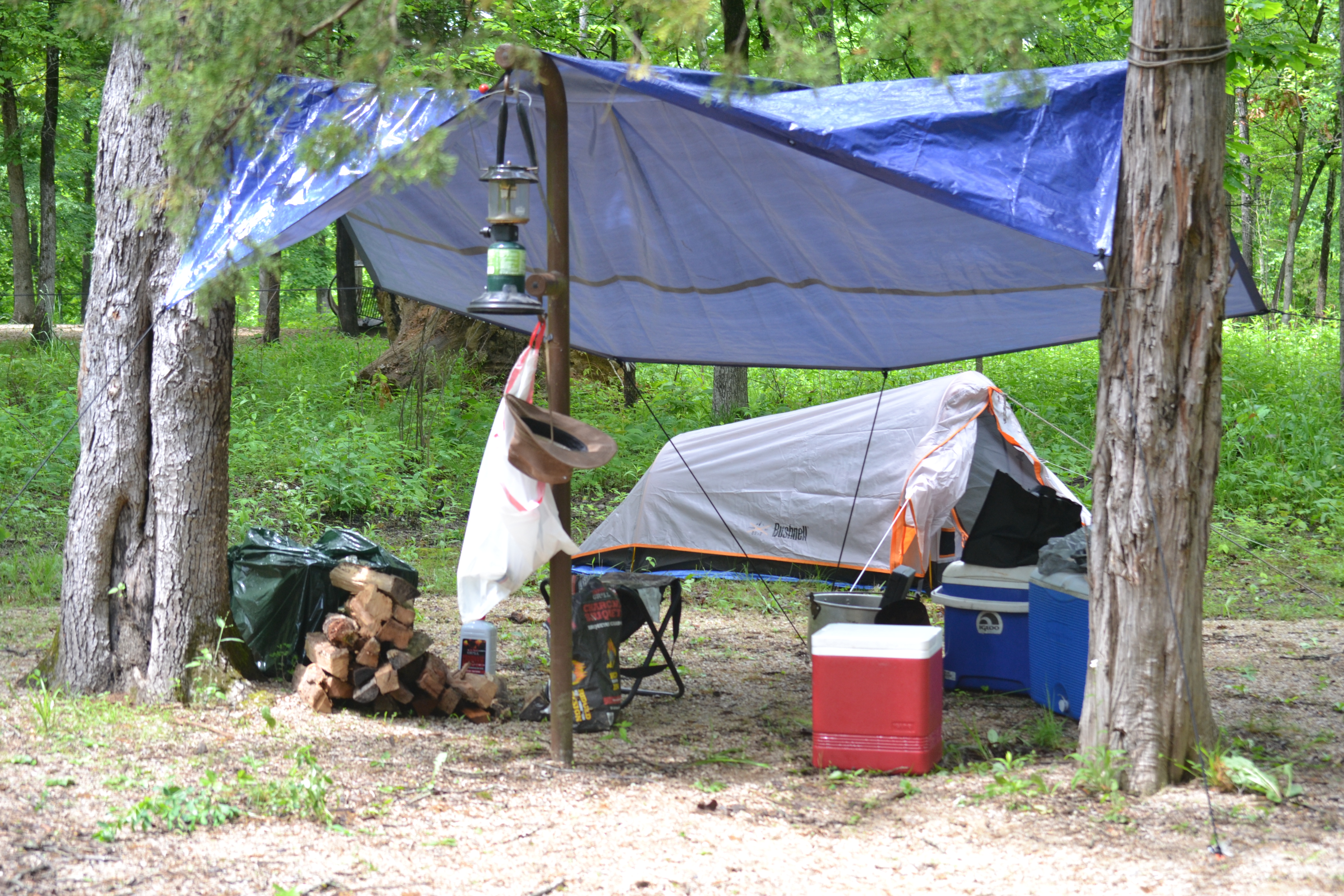
When I was campground host, I discovered a nesting area just off the St. Francis River. When they are nesting the cries, they make sound like something is killing something. They are quite disturbing and at 10:30 at night it will make the hair on the back of your neck stand up.
I got to witness two of these large birds do battle. They actually chest bumped in mid-air and would use tree limbs to catapult them into the air. It was quite the sight to behold. They fought hard. Some of the campers who heard their cries insisted it was Bigfoot screaming.
A big thank you to all that stopped by and read my post. You are appreciated very much. I hope I didn’t bore you.
A new year is now upon us. I wish everyone a joyful and prosperous new year. Remember to be kind to one another.
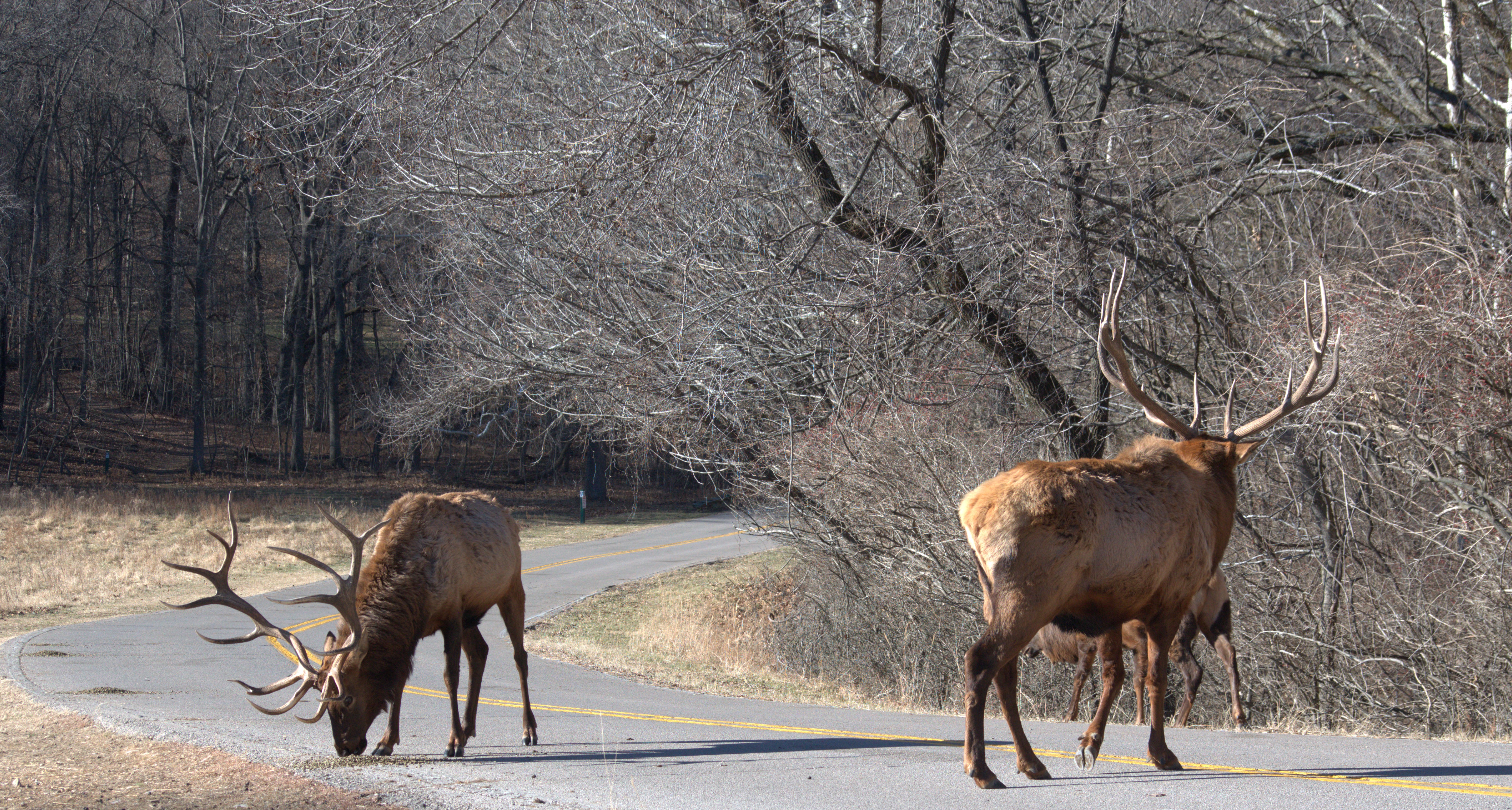
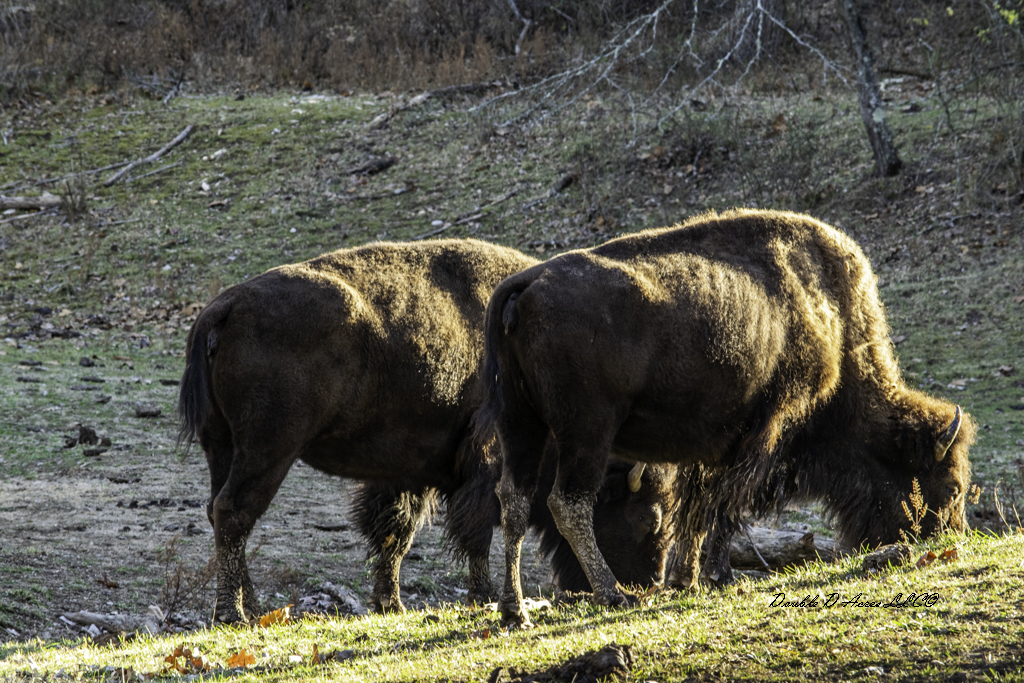
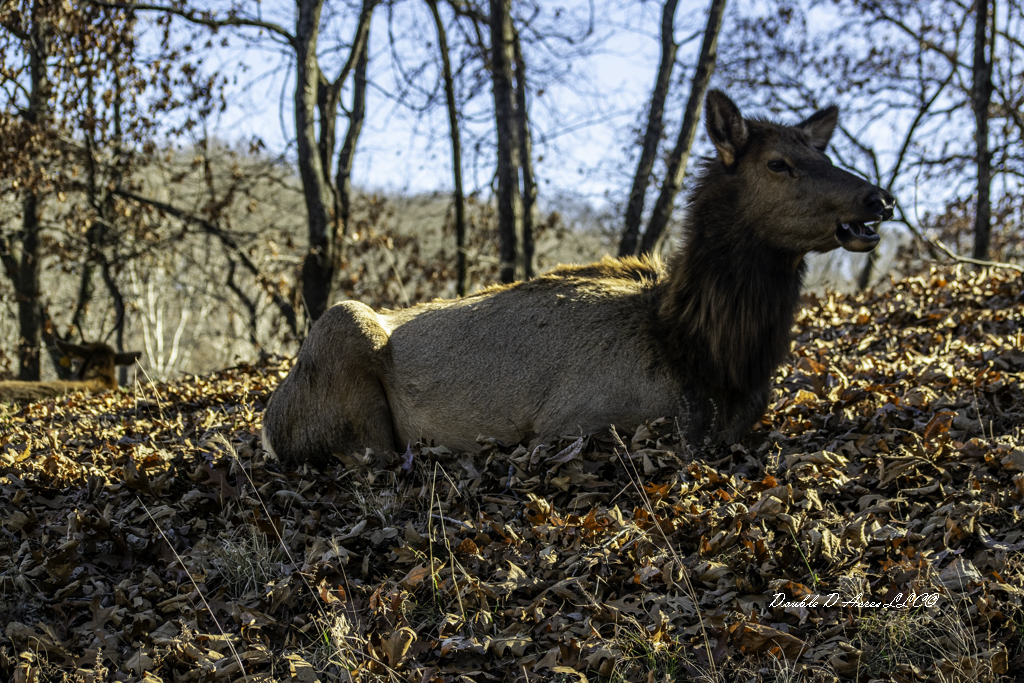
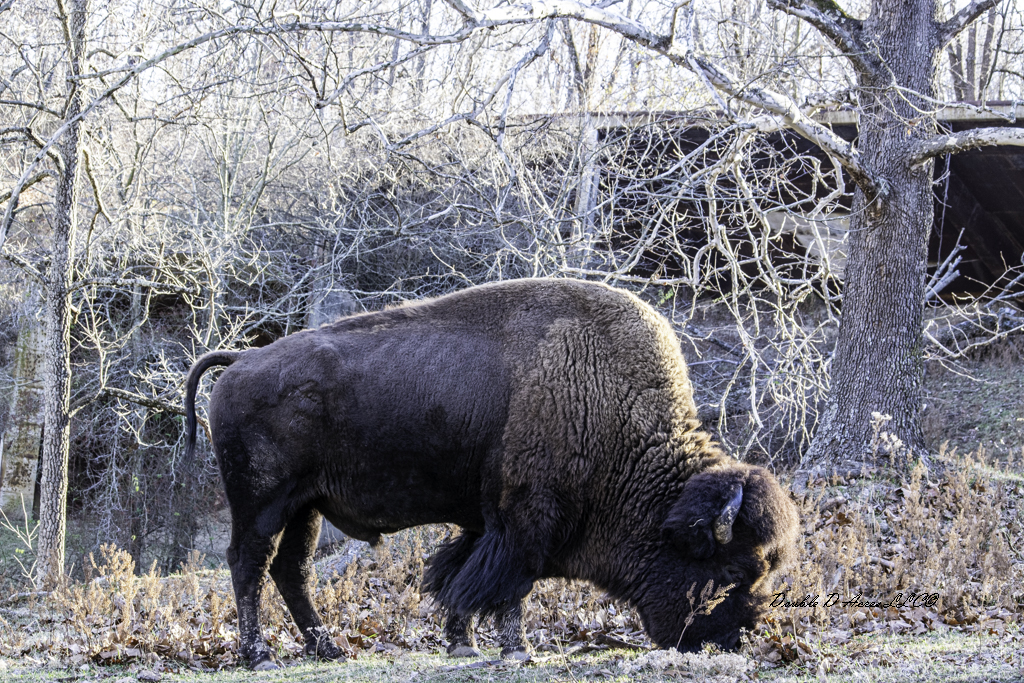
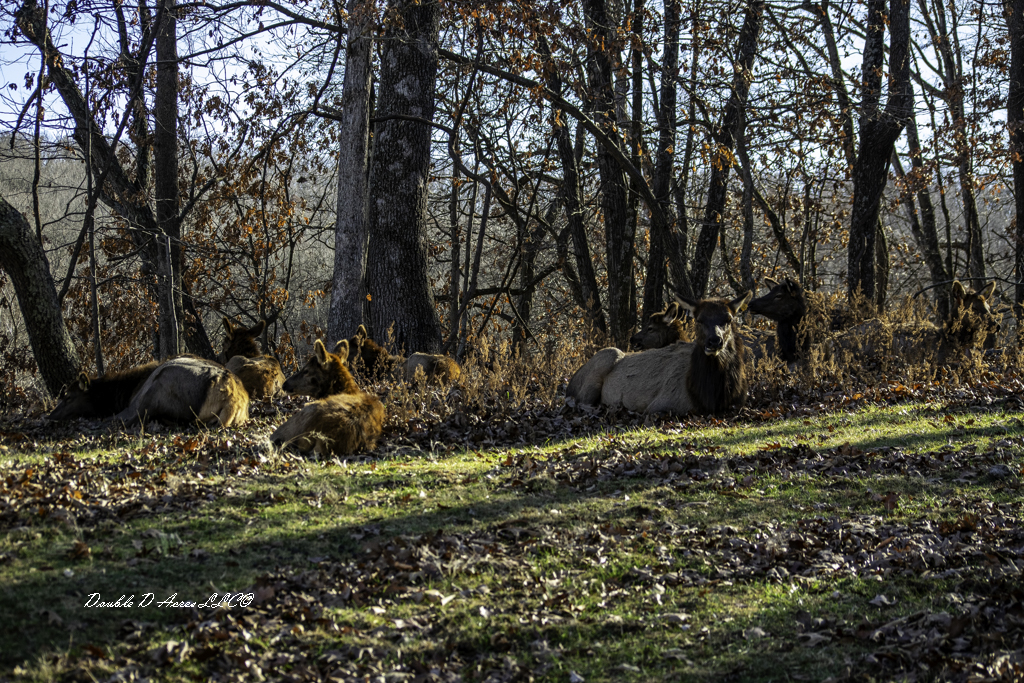
Nestled in St. Louis County in Missouri is a 546-acre wildlife area known as Lone Elk Park. What was once a World War II ammunition and testing range is now home too free roaming elk, bison, deer and wild turkey. Visitors can view them by driving and walking through the park. It features trails, nature center and picnic areas can be found around the park.
So why the name Lone Elk Park? All the park acreage was once a part of the 2,400 acre Tyson Valley Powder Plant. The area was used for the testing and storage of ammunition during World II. In 1948, after the war, it was used as a county park, and herds of elk and bison were established within the park. During the Korean War the Federal Government reacquired park. At that time, 1958, for the safety of the wildlife herds were destroyed and only one bull elk survived.
In 1964, St. Louis County acquired 405 acres of the original tract and in 1966 its name was changed to Lone Elk Park and in 1966 six elk were obtained from Yellowstone National Park. This was made possible through the efforts of the children of the Rockwood School Distract and the West St. Louis County Lions Club. Fred Weber Construction Company built the park’s lake at no cost to the county. Lone Elk Park was opened to the public on October 17, 1971. Then in July of 1971, six bison were acquired from the St. Louis Zoo and moved to the park.
Things to know before you go:
No dogs: Pets are not allowed even if kept in a vehicle. No feeding: DO NOT feed any of the wildlife. Donations: Entry is free, but donations are encouraged. For best viewing arrive around 8 a.m.
I have visited the park many times and remind you these are wild animals and are unpredictable. Never approach them or tease them. This could provoke an attack causing things to get ugly real fast.
Thanks for taking the time to read. I appreciate it very much. I remind you to be kind to one another. Being kind to someone doesn’t cost you anything but can change a person’s life for ever.
Around the year 1855, Mr. Beaugholtz, noticed that that boulders of quartz on a hillside overlooking the St. Francis River contained what appeared to be silver bearing galena. He convinced a man by the name of Lloyd to help him find the quartz vein. Together they dug several prospect holes, but due to their lack of mining experience, failed to locate the vein.
An experienced miner by the name of William Einstein heard about the quartz boulders and was successful in finding the quartz vein and began prospecting and mapping it for the next 16 years, then he and Samuel Knox bought the property.
He finally decided on a place to begin a shaft on May 5th, 1875. He hired a group of men to begin digging and the deeper they dug there was an improvement in the ore. He decided to look for a newer location of the vein closer to the river. He was successful and found the vein located just a few feet above the elevation of the river. He then directed his focus to this area. He began looking for investors and was able to persuade Samuel Knox Jr. and Gerald Allen to join him and Samuel Knox and the Home Silver Mining Company was founded in May of 1878. It was estimated that it took $175,000 to develop the mine.
Construction of a state of the art three story mill began and 20 acres of land was set aside for the development of a town that was named Silver Mountain and consisted of the Company Office, hotel, school, grocery store, dry goods store, drug store, blacksmith shop, two butcher shops. Two to three hundred miners were employed and along with their family members created a population estimated to be 800 to 900 people.
The Madison County court approved the Home Silver Mining Company, and a stone dam was constructed a short distance upriver from the mine and was used to produce energy to provide power to the mill. With all the improvements, the mine began producing 100 tons of ore a day that contained approximately 15 to 90 ounces of silver a day.
August 24th, 1879, the company shipped its first load only to close 4 months later. In December 1879, Einstein was replaced by Donald Palmer who ordered all equipment removed from the mine. All unprocessed ore was sold, and the miners were let go. Within a year and a half, the town was abandoned. In the time it operated, 70,000 pounds of lead and 3,000 ounces of silver were produced.
There were several people who didn’t want to give up on the mine and several attempts were made to reopen it. Later, uses for Tungsten were developed and beginning in 1916 several companies attempted to mine Tungsten from it. All mining operations were halted in 1958.
It was originally named “Einstein Silver Mine” and in 1879 a post office was established and called Einstein Silver Mines and in 1892 the name was changed to Silver Mine. The town was named after a silver mine located nearby. In 1955 the post office was closed.
The photograph is of the walking bridge that spans Turkey Creek. It is in Turkey Creek Day Use area.
I have been gone for a while. My wife and I volunteered at Silver Mines as campground hosts. Internet service was minimal to nonexistent. We were there for 8 months. I am going to do some blogs about our adventure and share my photographs. This was an introduction of how Silver Mines came about. More to come.
Silver Mines Recreation Area has an abundance of wildlife and beautiful landscapes. I hope I don’t bore you with the photos.
The Missouri Department of Conservation just launched their 2020 winter trout program in Southeast Missouri lakes located in Farmington, Jackson and Perryville. They along with Perry County Sportsman Club and the MDC purchase the trout that are used to stock these lakes.
Farmington stocks Giessing Lake located in Engler Park. Giessing was stocked with approximately 1200 trout and several lunkers were added in the mix to make it interesting. Catch and release is implemented until February 1 at which time an angler can keep 4 a day.
December 6, I finally was afforded an opportunity to try my luck at hooking a few of these beauties. I was chomping at the bit to try my new fly rod and reel out.
It is only a 2 acre lake but there is plenty of action for the trout angler. I started the day with my fly rod and reel. I found that my walking boot really interfered with my casting. I was definitely not on my game but then again I had just got off my crutches 2 days before. I threw everything I could think of at them and just watched them swim by the fly showing no interest at all. I worked until the wind made it impossible to cast and decided to go to plan B.
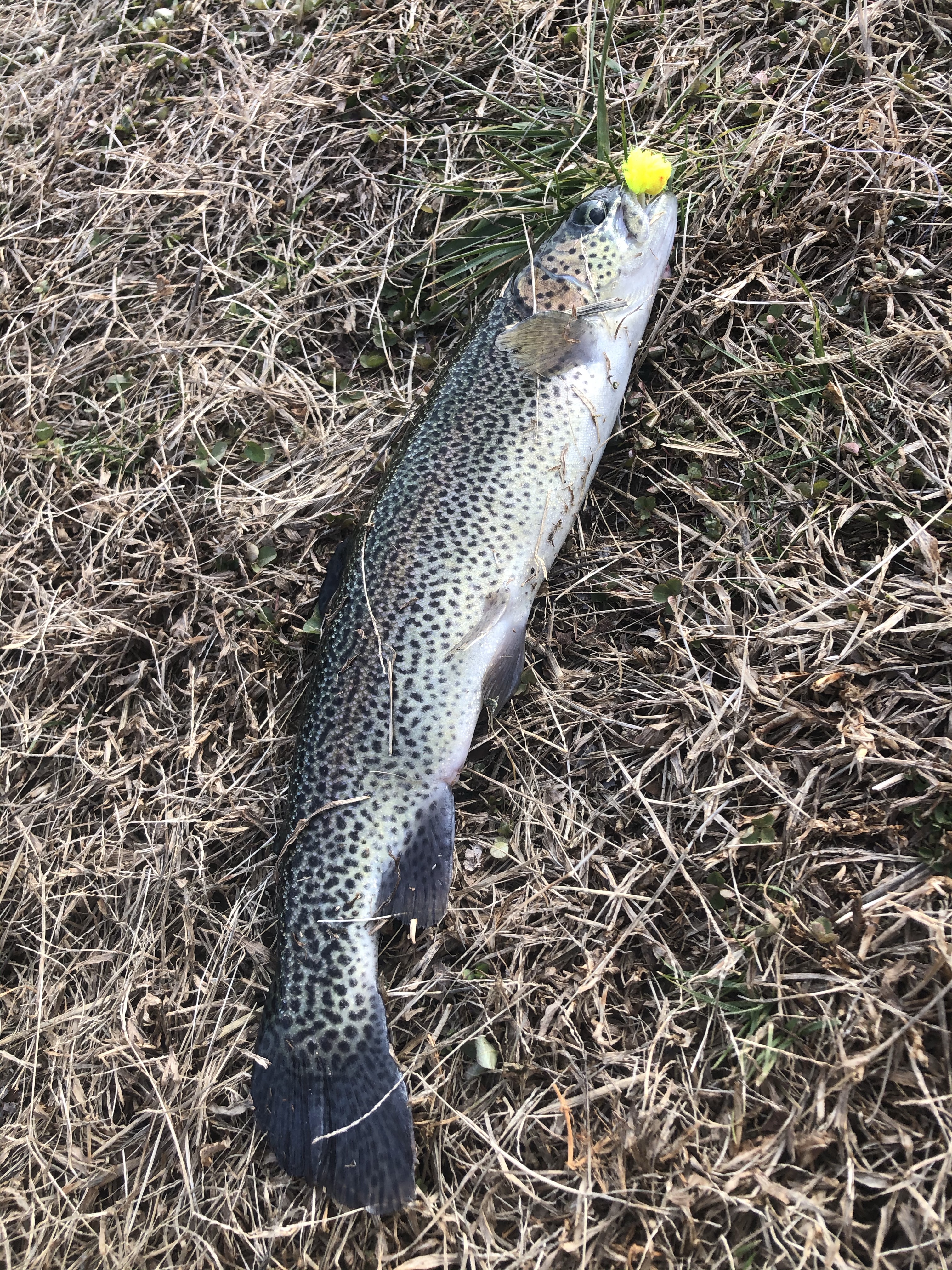
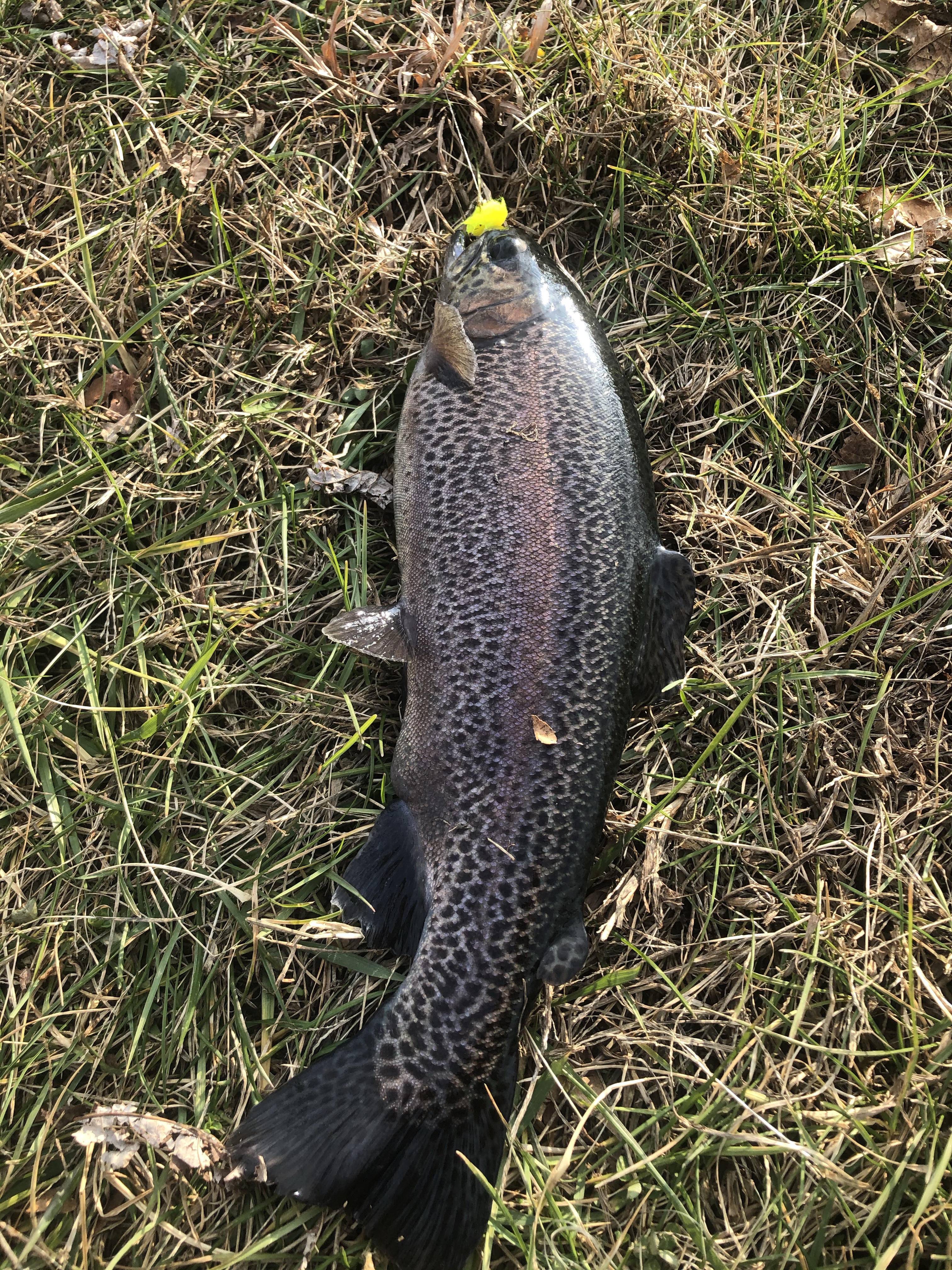
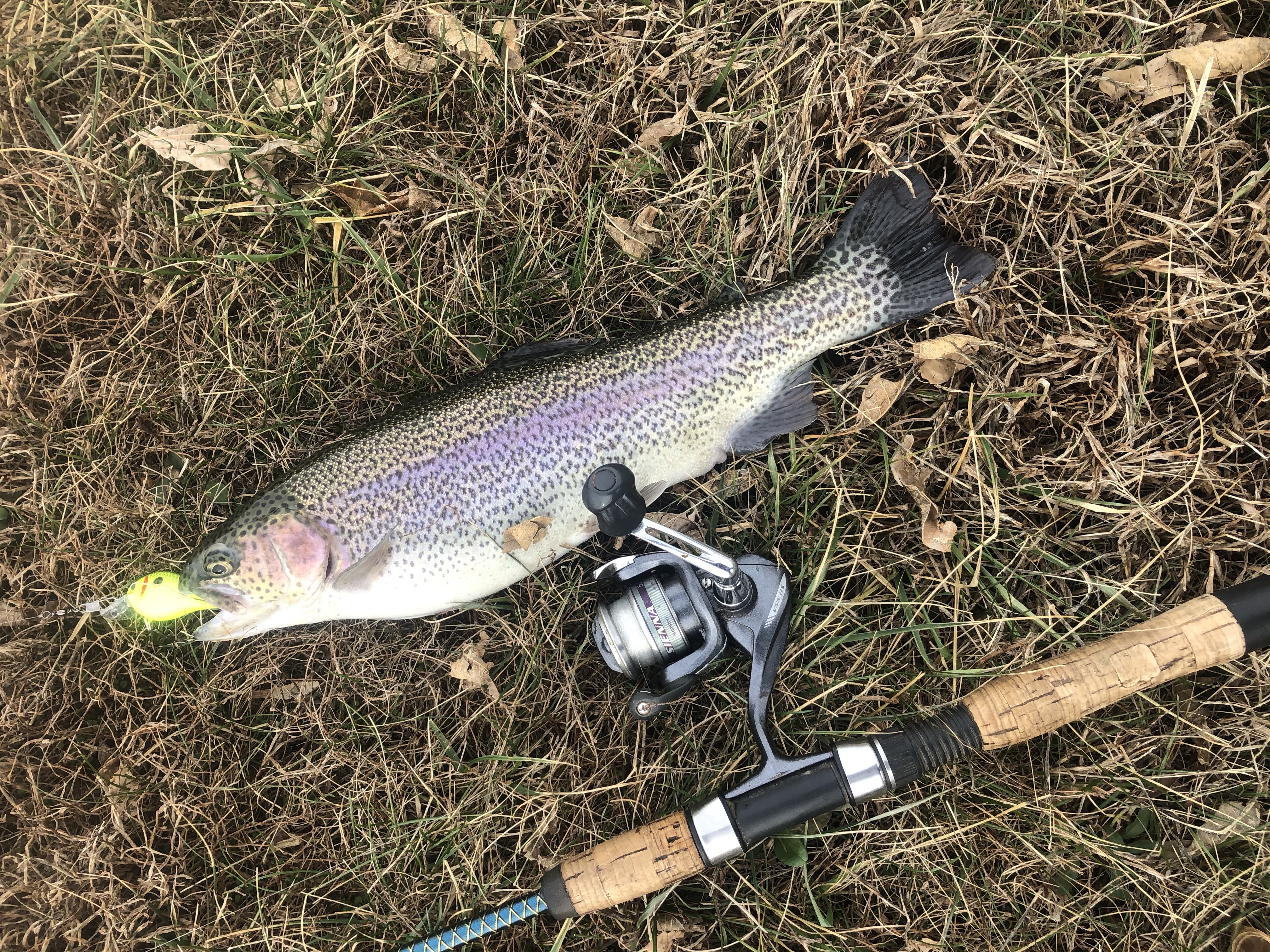
I opted for my spin cast and a yellow glo-ball. On my very first cast I hooked one. The fight was on. If you have never hooked into one you are missing the fight of your life. I ended up catching four. It was windy and cold but still a good day to be at the lake.
“I went to the woods because I wished to live deliberately, to front only the essential facts of life, and see if I could not learn what it had to teach, and not, when I came to die, discover that I had not lived.” – Walden Henry David Thoreau
The definition of nature is the material world, especially as surrounding humankind and existing independently of human activities. It is also defined as the phenomena of the physical world collectively, including plants, animals, the landscape, and other features and products of the earth, as opposed to humans or human creations. One could say that nature is everything.
There is a saying “Stop and smell the roses.” Relax and take time to enjoy or appreciate the beauty of life. Stop stressing out, overthinking or complaining. My version is “Stop and drink of the beauty of nature.”
As spring draws near camping season comes into view. The weekend warriors who live in the cities and suburbs will begin their assault upon the campgrounds. They appear in the parks pulling their 30 foot campers loaded with all the amenities of home. I don’t think this is what Thoreau had in mind when he advocated that people leave their urban and industrialized areas to explore nature. He felt that “modern life” robbed people of their best selfs and that living in harmony with nature was essential. In today’s society the campgrounds are so overpopulated that they are nothing more than smaller communities of which they were trying to leave behind.
In Missouri the rivers and Ozark streams become heavily congested with weekend floaters occupying rafts, inner tubes, kayaks, and boats. Sadly the amount of litter left behind is mind boggling. Thoreau often wrote about the importance of preserving the wilderness and the importance of living in harmony with nature. His ideas are completely lost on the minds of the majority of weekend revelers. One can see the evidence if they float the rivers on Monday morning. Sandbars and gravel bars are littered with aluminum cans, trash, and an occasional tent. It doesn’t have to be this way. If you pack it in pack it out. It is that simple. My motto is is,”Leave it better than you found it.”
We as a whole need to learn to respect Mother Earth and what she has given us. Preserve the magnificent beauty of Mother Earth so that future generations can enjoy it. We don’t know what we have until it is gone.
“I love nature partly because she is not a man, but a retreat from him. None of his institutions control or pervade her. There a different kind of right prevails. In her midst I can be glad with an entire gladness. If this world were all man, I could not stretch myself, I should lose all hope. He is constraint, she is freedom to me. He makes me wish for another world. She makes me content with this.” – Henry David Thoreau’s Journal
The Missouri Conservation and Use Tax is once again under attack. ‘This money goes directly to support forest and wildlife conservation efforts. Out of every $8 of taxable goods one penny goes for conservation.
In the early 70s Missouri citizens petitioned to get the tax placed on the ballot. They succeeded, it passed and was implemented on July 1, 1977. Then in 1999 state officials attempted to divert the money collected to pay refunds to taxpayers to only have the Missouri Supreme Court rule that the money could only be used for conservation and not be considered part of the states total revenues.
When I was a child there were a lot of areas of Missouri where it was rare to see a deer or a turkey. I grew up fishing the Big River and bass fishing was mediocre.
In 1977 when the money was allocated to the MDC, things began to change. A little slow at first but soon things began to improve. Due to responsible conservation efforts game became more abundant. Hunters were allotted more tags to fill for deer and turkey. Bass fishing became more rewarding. Money started coming in from out of state hunters who wanted to take advantage of our good hunting. Out of state fisherman also traveled to Missouri to take advantage of our excellent fishing. New land was bought and more public hunting areas and river accesses were made available. New conservation areas were established. Other states began to take notice and implemented programs in their states that the MDC had created.
Now Republican Chris Dinkins of District 144 has introduced two constitutional amendments that could destroy the improvements that have been made. HJR 108 and HJR 112. She says it is in an effort to rein in the overgrown bureaucracy of the MDC and make the department more accountable to the people.
HJR 108 would give the voters the opportunity to change the Missouri Conservation Commission. Presently the commission has four members who are appointed by the governor. Her amendment would change that number to nine nonpartisan members. Voters would elect one member from the current MDC districts and the governor would appoint one member to the commission. I thought she wanted to rein in bureaucracy within the department but this would only add to it causing more bureaucratic red tape.
HJR 112, if passed by voters, would take two thirds of the money and pass it on to other areas in need. The Missouri Supreme Court has already ruled that the money could only be used for conservation and can not be considered part of the states total revenues. Lawsuits? I know the voters are voting on it but the voters passed it in the first place.
She points out that the MDC has a savings account balance of almost 100 million dollars. Sounds to me like they are being pretty responsible. Representative Dinkins that’s let me point out that a savings account is usually used for emergencies. How much of that money was contributed from the Conservation Sales and Use Tax and how much from the sale of licenses, tags, ammo, etc.? If the economy tanks the MDC could go through that money pretty quickly in an effort to keep its programs afloat. Did you ever think of that are better yet do you even care? She says the MDC continues to attack the civil liberties of this state but cites no references. If you are going to throw the sportsmen of this state under the bus at least tell us why? Since you represent Reynolds county I would be suspect it has something to do with the battle between feral hog hunters and the MDC. So your solution is to punish all sportsman of the state of Missouri?
I hope the sportsmen in this state takes a long hard look at what is going on here and the impact these two amendments will have on bird hunting, deer hunting, turkey hunting, fishing and all the other programs offered by the MDC. Are we going to stand by and let this destroy all the accomplishments the MDC has made since 1977. I for one hope not.
“In rivers, the water that you touch is the last of what has passed and the first of which comes; so with present time.” Leonardo da Vinnci
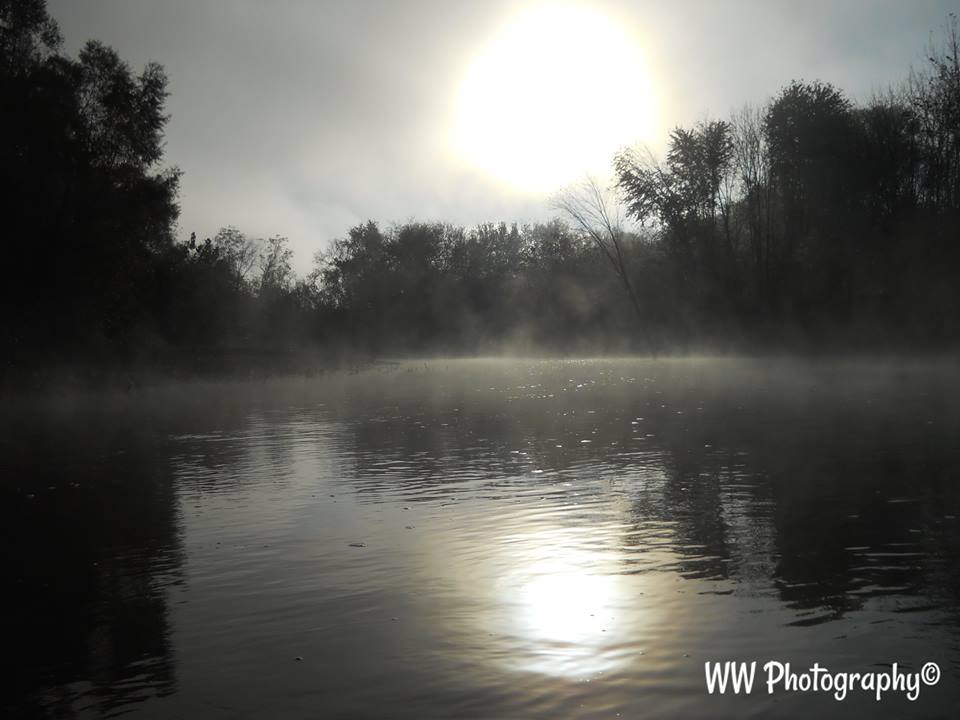
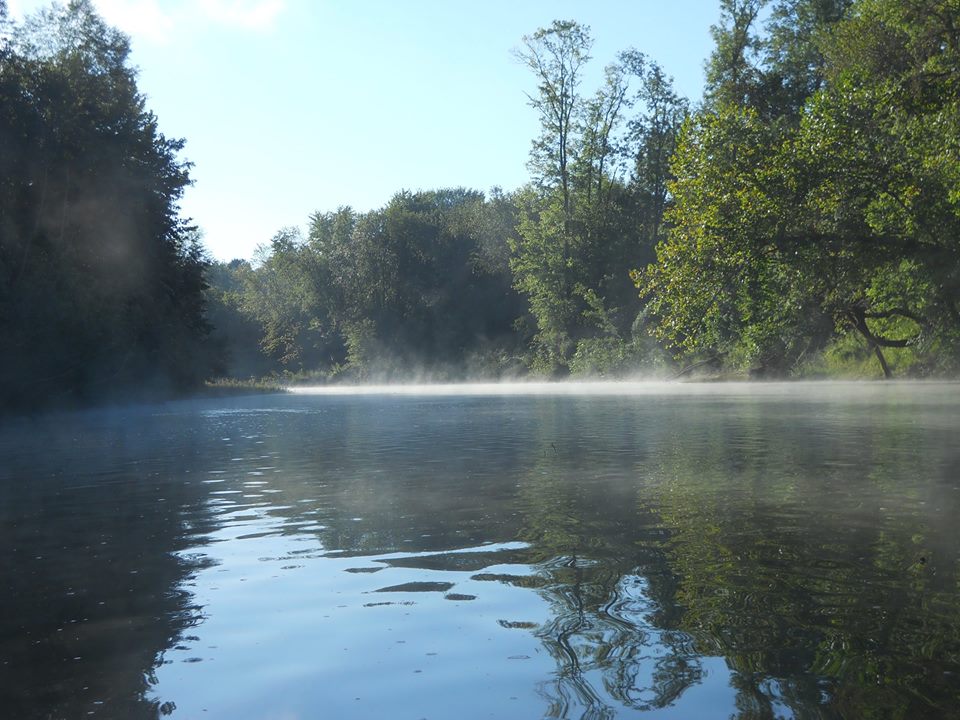
It was an early fall morning. The temperature was in the forties and the fog seemed to be dancing as it rose from off the water. As I shoved the yak off the boat ramp and out into the moving water my heart began to race with excitement. The fog was so thick that it was blocking sunlight and it was somewhat of an eerie sight. Fish had all ready began feeding and you could hear and see them hitting the top of the water. I quickly paddled upstream to a point in the river where I would turn the yak downstream and fish my way back to the boat ramp.
I reached my destination and pulled up on a gravel bar and prepped my rod and reels and chose the baits I would tie on. I slowly began my way back down the river and began casting. Around the fifth cast I felt something pick up the Charlie Slider worm and take off with it. I set the hook and the fight was on. It wasn’t very big but I was using an ultra light with 4 pound test line which made it feel like a 5 pounder.
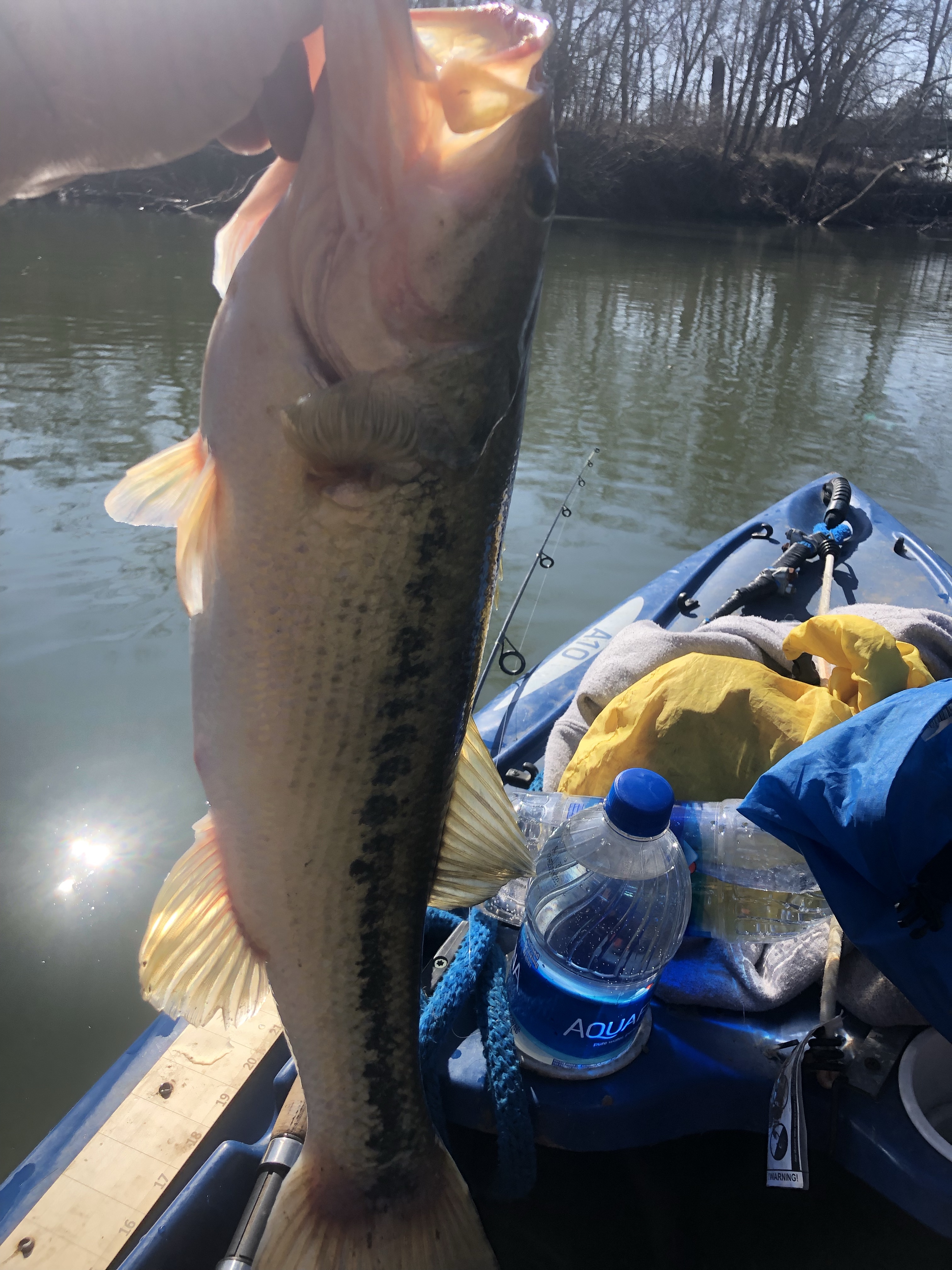
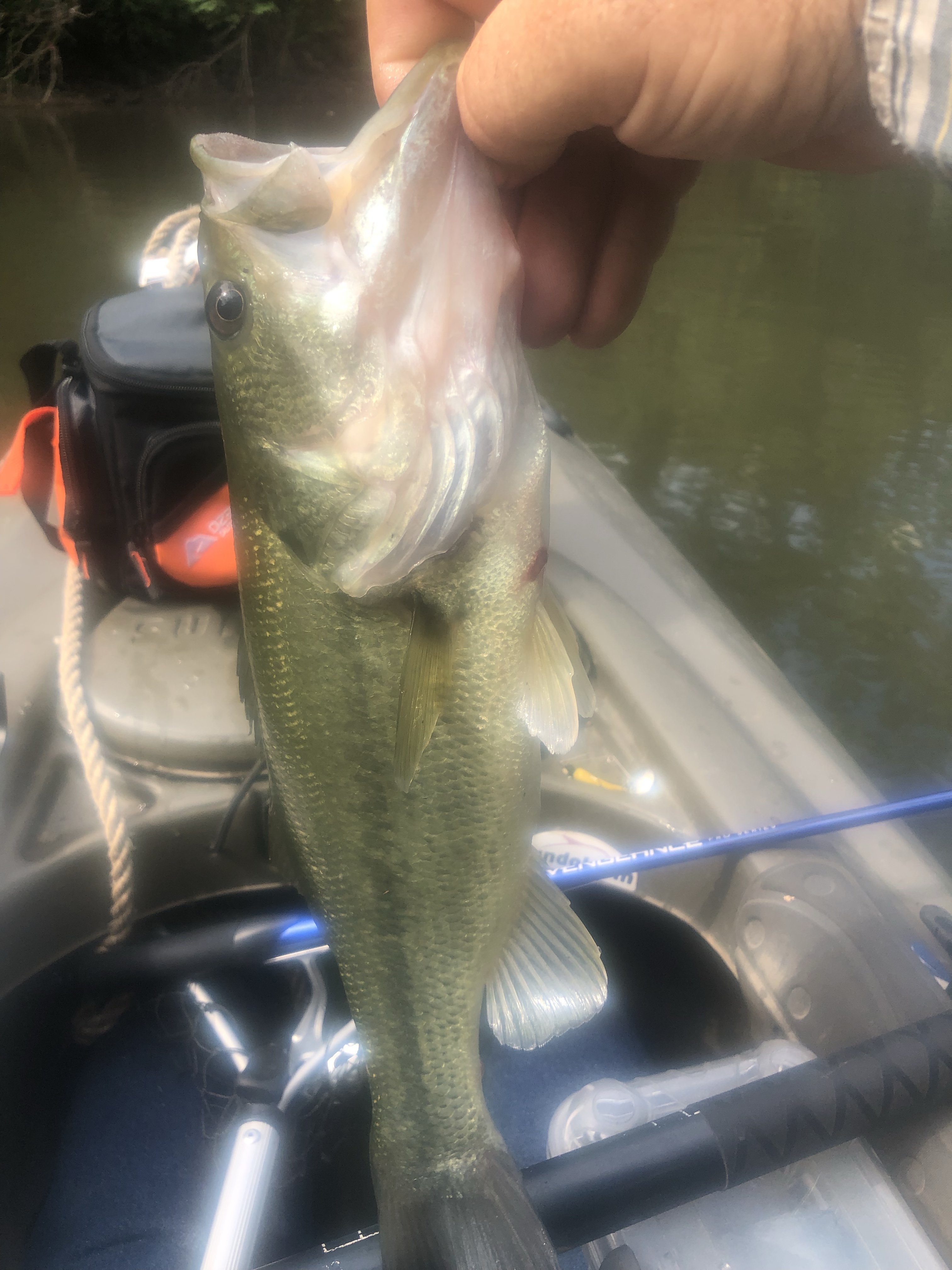
Small largemouth bass.
As I floated and fished my mind began to work overtime. I wondered; did Native Americans ever float this area, who was the first settlers that found this area, what is the biggest bass that was ever caught here etc.. I thought to myself how grateful I am to be able to see the beauty of the river first hand and experience the peacefulness that abounds in the early morning hours on the river.
Bourbeuse River
As I floated around a bend in the river and eyed two deer drinking water at the end of a sand bar. I was almost close enough to touch them when they noticed me and bolted into the woods. Further down the river i came upon a beaver who wasn’t very happy with me trespassing on his part of the river. Wildlife is abundant on the river this morning.
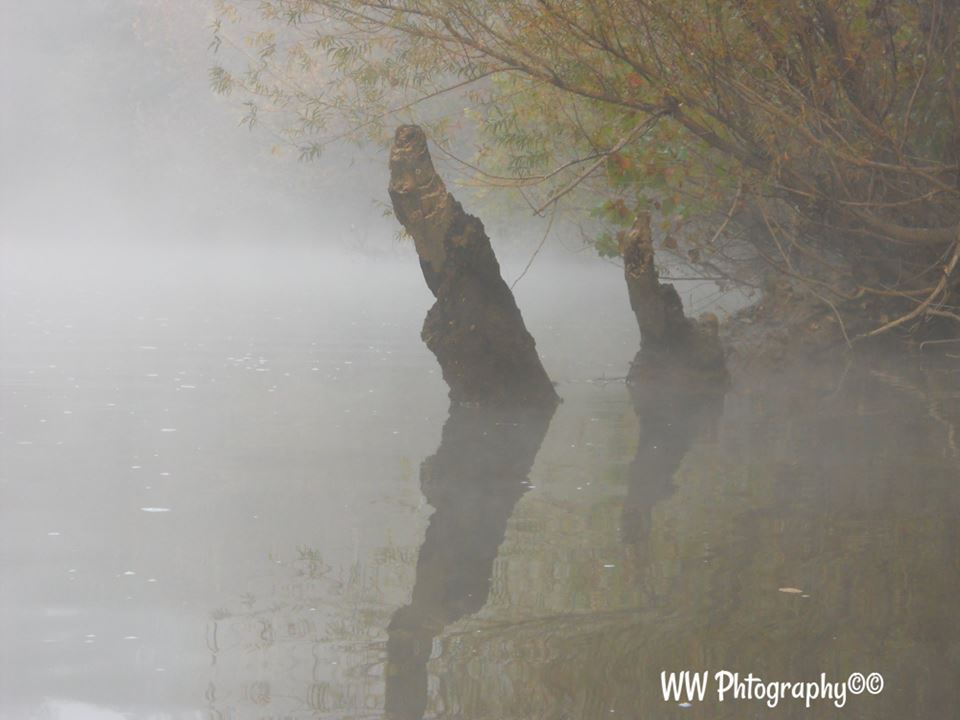
Bourbeuse River
As I approach the boat ramp I am overcome with some sadness as the morning float comes to an end. It was a great morning. The batteries were recharged and the mind was cleansed and the soul rejuvenated. Caught some fish and filled my mind with the beauty of the river. Life is good.
Thanks for taking the time to read my blog. I hope you enjoyed and if you did be sure to let me know. Be kind to one another, share the love and God Bless you one and all.
Too many times we stand aside and let the waters slip away
’til what we put off ’til tomorrow has now become today
so don’t you sit upon the shoreline and say you’re satisfied
choose to chance the rapids and dare to dance the tide…
Garth Brooks/ The River
Hello everyone! How about this weather in the midwest? It feels like May has arrived early. Very mild temps and lots of sunshine. I definitely have “River Fever”. I can hear it calling my name.
Big River near Leadwood, MO
Ever since I was knee high to a grasshopper I have been drawn to the river. It is a place where I can go and relax and recharge at the same time. It is a great place for photographers and artists to attempt to capture the beauty of nature. Time spent at the river will mend a broken heart and help a person to deal with the death of a person close to them. The perfect place to meditate, clear your head, and do nothing at all. A place to take the family and enjoy time spent together.
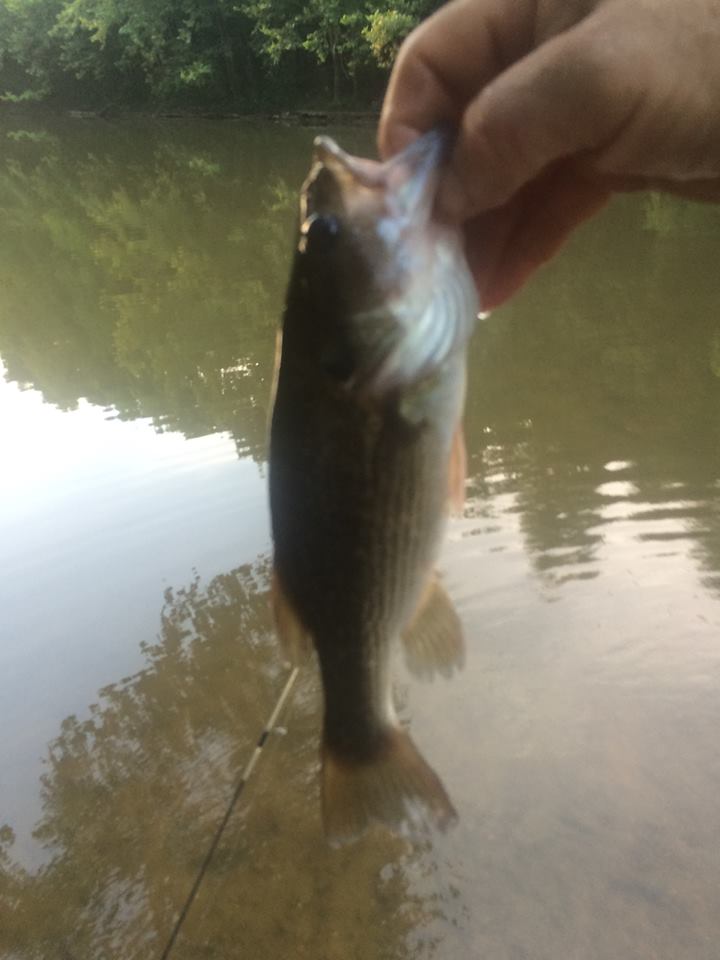
Smallmouth Bass caught on the Big River
I am an avid fisherman and kayaker. I love spending time on the river in my yak and fishing. Some days I even put bait on the hook. I usually fish using an ultra light rod and reel with 4 pound test line.
Bourbeuse River near Union, MO
I love the mystique of the river. When I float and fish a new section of river my mind begins to wander, what is around the bend? How deep is the water. Who has been here before me. Did early settlers use this river? etc..
My favorite time on the river is night time for sure. You aren’t living until you have been serenaded by a bunch of chirping crickets and croaking frogs with a beaver keeping time with the rhythm by slapping its tail on the water and the distant howling of the coyotes. Natures own natural choir. The stars twinkle bright and sometimes you get to see a shooting star. The river takes on a whole new life when the sun sets and darkness falls upon the river.
Big River near Leadwood, MO
Thank you for taking the time to read my blog. If you haven’g taken the time to explore the rivers I hope I have piqued your interest to do so. Be kind to one another, share the love and God Bless you one and all.
This is actually squirrel cooking but this is the way I prepared the Possum
“Good painting is like good cooking; it can be tasted, but not explained.” -Maurice de Vlaminck
Oh my. I can hear all the groans out there. He really doesn’t eat possum does he? Well…yes he does. My grandmother really had the art of preparing possum mastered. She could make it taste like a $20 t-bone.
If you are wondering, I am kind of a hillbilly. I grew up dining on squirrel, deer, groundhog, raccoon and an occasional opossum. My dad wasn’t too fond of the other white meat. Come to think of it he wouldn’t even attempt to partake of a muskrat. The great thing about these animals was you didn’t have to go to the store and buy them. The only cost was your hunting license and shell.
My grandmother was the one who basically taught me how to prepare each one of these critters for the dinner table. Squirrel- usually fried and make gravy from the drippings. Squirrel and dumplings was my favorite. Raccoon- Boiled until all the grease had found its way out of the carcass. Then it was either baked with sweet taters and carrots or pulled off the bone and simmered in beer, butter and bbq sauce for a couple of hours. Groundhog – prepared the same way as the raccoon. Deer – prepared pretty much the same way as beef.
Possum – Now grandma preferred to boil the possum until all of the grease had been boiled out of it. Then she would would put it in a baking dish and add seasoning, potatoes, carrots and onions and she would bake it until the veggies were done. I did try deep frying one time and it was quite tasty.
Part of my cowboy kitchen
Then one night I had just got finished skinning a possum and had a fire going in my outside cowboy kitchen. So I decided to cook this possum over an open fire. There was one thing I didn’t think through very well. The possum would have to be turned to cook both sides. Well I hadn’t par boiled this particular critter. So that meant he was full of high octane possum grease. As I turned it on the fire the grease began to find its way into the fire below it and then, then. then….WHOOOOOSH! The fire came to life. It had to be like Mount St. Helens erupting. The night was lit up. Finally the fire calmed down and I was able to finish cooking a fine meal. Next time I will be prepared.
Another part of cowboy kitchen
Well I hope I didn’t gross you all out too bad. Thanks for taking the time to read it. Be kind to one another, share the love, God Bless you one and all. By the way you know why the chicken crossed the road? To show the possum that it could be done.
Hi! my name is Sebastian (You can call me Seb!) ...welcome to my Blog. I'm a photographer from Worcester, Worcestershire, England. Thanks for dropping by! I hope you enjoy my work.
Hi! my name is Sebastian (You can call me Seb!) ...welcome to my Blog. I'm a photographer from Worcester, Worcestershire, England. Thanks for dropping by! I hope you enjoy my work.














 doubledacres